Sports day, June, bright enough that I had no excuse. My granddaughter was on the far side of the field waving both arms at me, and I waved back enormously at a child in the same colored shirt standing about ten feet to her left.
She was seven. She thought it was funny. My daughter did not think it was funny, and neither did I once I was back in the car.
Here is the part I had not admitted. It was not the first time. It was the first time somebody saw me do it.
There is a row in every hall, every recital, every match, past which faces stop resolving into people. For years that row was somewhere near the back. It has been moving toward me, a little at a time, and I had been managing it by sitting closer and calling it a preference.
“I had stopped saying yes to the back of the hall. I called it wanting a good view.”
What I was told
New prescription, which helped a little at distance and not at all with faces. A recommendation for better lighting at home, which is not the problem, because at home everyone is three feet away. Then the sentence: at your age this is very common.
It is very common. That is true and it is also the end of every conversation I have had about it. Common is a description of how many people it happens to. It is not an explanation of what is happening.
What I tried before I read anything
In order, honestly.
- Two new prescriptions in three years. Each one sharpened the letters on a chart at twenty feet. Neither one gave me a face across a field.
- Progressives, then back to two pairs. A hundred and eighty dollars to learn that the problem was not where my focus was.
- Sitting nearer the front, everywhere. Works. Also means arriving forty minutes early to everything and pretending that is a personality trait.
- Better lamps at home. Made reading easier. Irrelevant to the thing that was actually bothering me.
- Asking my daughter to point. Which is how a grandmother turns into someone who needs help at a school gate.
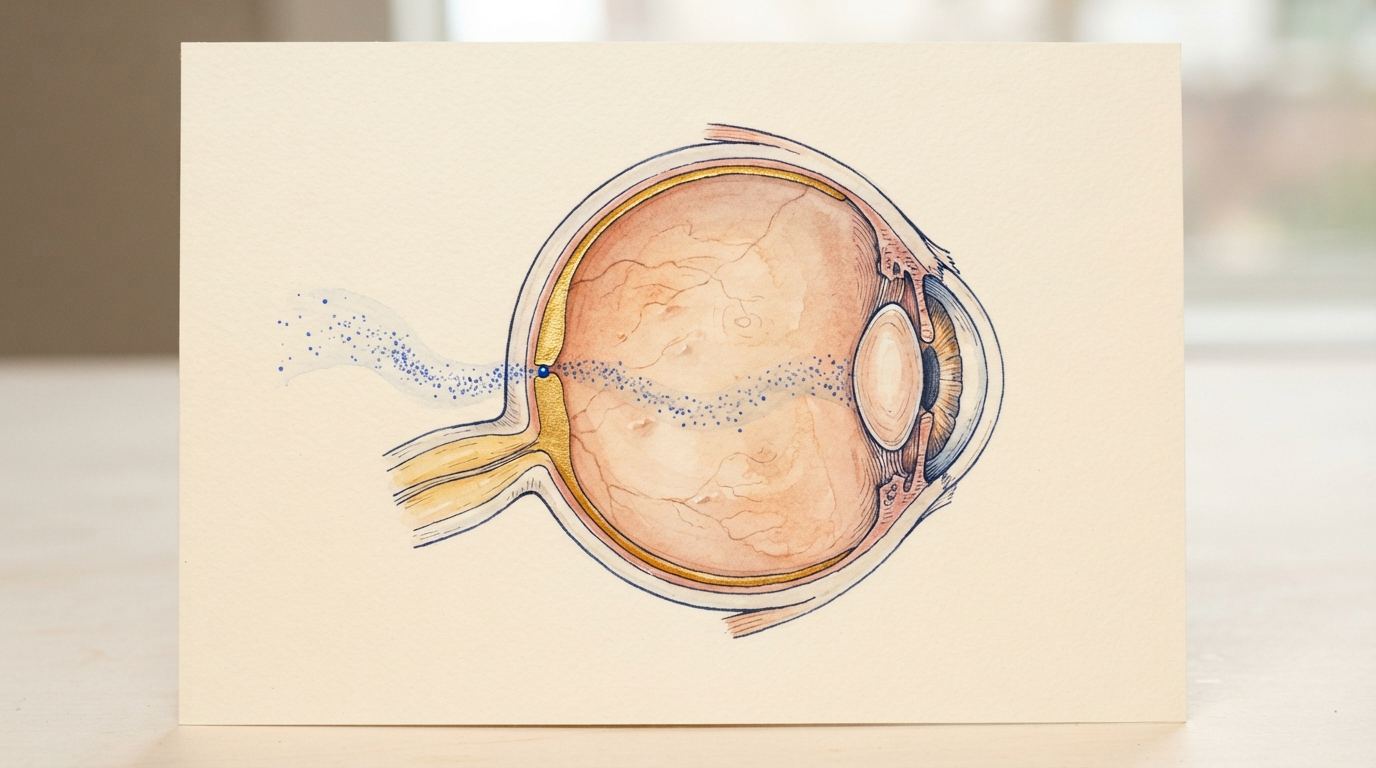
Everything on that list was aimed at getting more light, or sharper light, into my eye. None of it was aimed at what my eye was doing with the light once it arrived.
There is a particular kind of tiredness in managing something nobody will name for you. My daughter thought I was being vain about glasses. My son thought I should simply go to a better optometrist. Neither of them was being unkind, and neither of them understood that I had already been, twice, and come away with a stronger prescription and the same field.
I am not writing this because I want sympathy about a school sports day. I am writing it because it took me four years to work out that the thing I was experiencing had a name and a mechanism, and in all that time not one person in a consulting room offered me either.